Project AIRI: The Open Source Neuro-sama That Plays Minecraft With You
A self-hosted AI companion with voice chat, Live2D avatars, and autonomous game agents. 34k stars, 3.4k forks, and a monorepo that spans TypeScript, Vue, Rust, and more.
- AIRI is the most ambitious open source attempt to recreate Neuro-sama, combining realtime voice chat, Live2D/VRM avatars, and autonomous game-playing agents in a single monorepo.
- The project supports 20+ LLM providers through its lightweight xsAI SDK and runs on web, desktop (Tauri), and mobile (Capacitor), with native CUDA/Metal acceleration via Rust.
- Game agents for Minecraft and Factorio, social bots for Discord and Telegram, and a plugin system for Home Assistant and VSCode make AIRI a true multi-platform digital companion.
- At 34,000 stars and active alpha releases, AIRI has already spawned an entire ecosystem of sub-projects, from universal speech proxies to DuckDB-WASM Drizzle drivers.
The Dream: Your Own Neuro-sama
If you spend any time on Twitch or YouTube, you have probably encountered Neuro-sama. She is the AI VTuber created by developer Vedal who can play games, sing, hold conversations, and interact with thousands of viewers simultaneously. She has become a cultural phenomenon. But there is a catch: Neuro-sama is completely closed source, and when her streams go offline, you cannot interact with her.
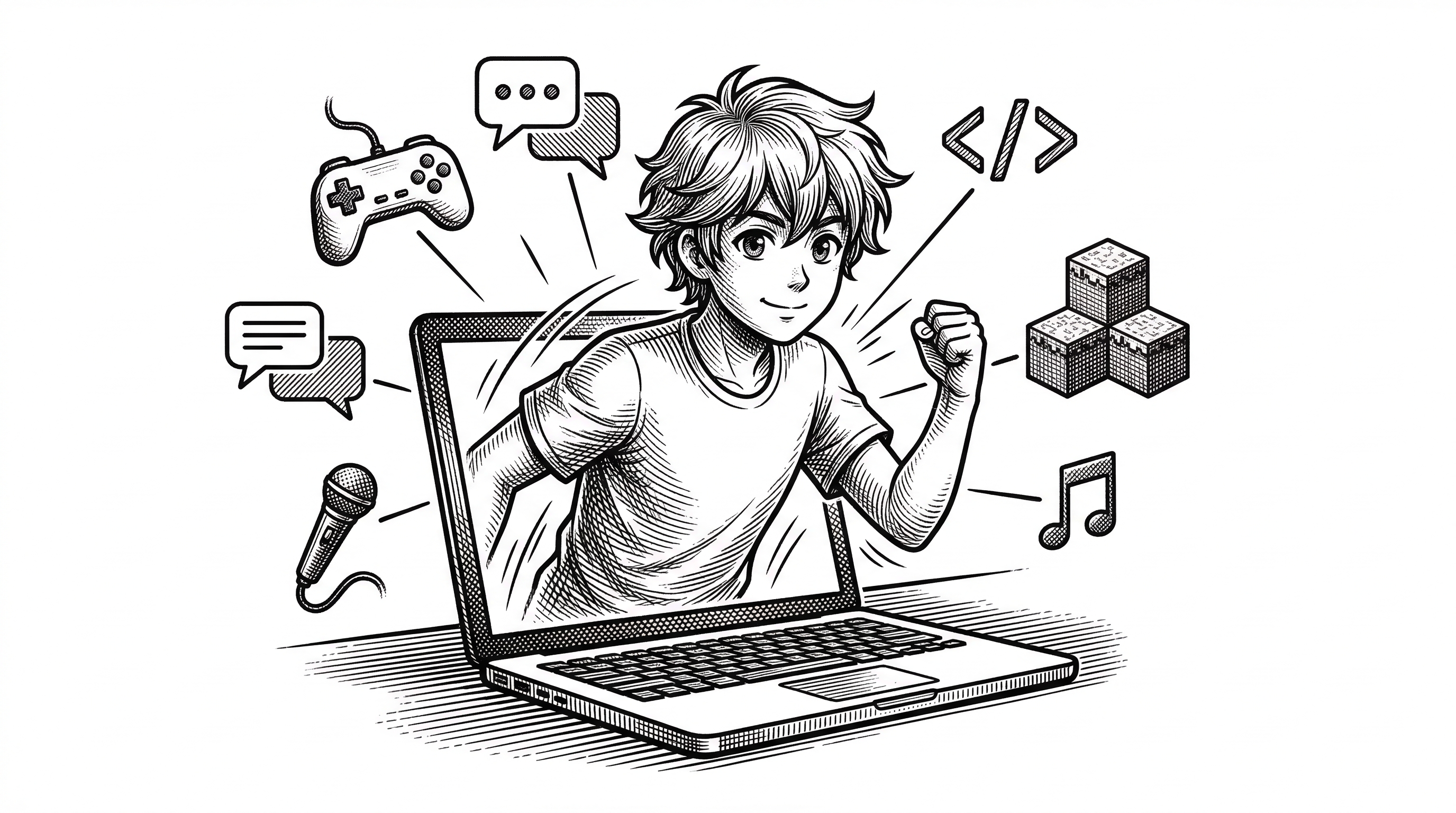
Project AIRI started with a simple question: what if you could have your own? Not a chatbot in a text box. A fully embodied digital companion with a voice, a face, emotional state, and the ability to jump into a Minecraft world and mine diamonds with you.
The project traces back to mid-2024 when the lead developer, known as Neko, began serious work under the Moeru AI organization. By March 2026, it has grown to over 34,000 GitHub stars, 3,400 forks, and a sprawling monorepo with dozens of packages. The latest release, v0.9.0-alpha.16, shipped on March 14, 2026.
What Makes AIRI Different
The AI VTuber space is not empty. Open-LLM-VTuber offers offline-first voice chat with Live2D. kimjammer/Neuro recreated the basics in seven days. Amica focuses on VRM and WebXR. Each project solves a piece of the puzzle.
AIRI's bet is on scope. Instead of doing one thing well, it attempts to build the entire platform: voice, avatar, games, social media, smart home, code editor integration, memory, and more. The monorepo contains 35+ packages spanning frontend UI, audio pipelines, server runtime, game agents, and native Rust crates.
The second differentiator is web-first architecture. Unlike projects that rely on Python backends and local model stacks, AIRI was built from day one on web technologies: WebGPU, WebAudio, Web Workers, WebAssembly, and WebSockets. This means the full experience runs in a modern browser. You can try it right now at airi.moeru.ai without installing anything.
| Feature | AIRI | Open-LLM-VTuber | Amica | kimjammer/Neuro |
|---|---|---|---|---|
| Primary Language | TypeScript + Vue | Python | TypeScript + React | Python |
| Avatar Support | Live2D + VRM (3D) | Live2D | VRM (3D) | Live2D |
| Game Playing | Minecraft, Factorio, DomeKeeper | No | No | Limited |
| Runs in Browser | Yes (PWA) | Web UI for control | Yes | No |
| Desktop App | Tauri + Electron | Electron (pet mode) | No | No |
| Mobile App | iOS + Android (Capacitor) | No | No | No |
| Social Bots | Discord, Telegram, Twitter | Bilibili | No | Twitch |
| LLM Providers | 20+ via xsAI | 10+ (OpenAI-compat) | OpenAI, local | OpenAI |
| Offline Mode | Partial (Ollama, vLLM) | Full offline | Local models | No |
| GitHub Stars | ~34k | ~6k | ~3k | ~1k |
Architecture: A Monorepo of Ambition
The AIRI codebase is a pnpm workspace monorepo managed with Turborepo. TypeScript dominates at 2.7 million characters of source, followed by Vue single-file components at 1.7 million. Rust crates handle native performance. The structure breaks down into five main areas.
Apps are the deployable frontends. stage-web is the main browser experience. stage-tamagotchi is the desktop companion built with Tauri. stage-pocket targets iOS and Android via Capacitor. A component calling playground and a dedicated server app round out the set.
Packages (35+) form the shared library layer. This includes the core character system, audio pipelines for transcription, UI component libraries, font packages for CJK support, avatar rendering for both Live2D and Three.js/VRM, the DuckDB-WASM database driver, pgvector memory integration, the server SDK, and the plugin protocol. Each package is independently versioned and buildable.
Services handle external integrations: a Minecraft agent using Mineflayer, a Discord voice bot, Telegram and Twitter bots, and a Satori protocol bridge for cross-platform chat.
Plugins extend AIRI into new environments: Bilibili streaming, Claude Code integration, Home Assistant smart home control, and a browser extension.
Rust crates provide native acceleration. The Tauri MCP plugin enables Model Context Protocol support on desktop. HuggingFace's candle library powers local inference with CUDA and Metal support, avoiding complex dependency management.
The Voice Pipeline
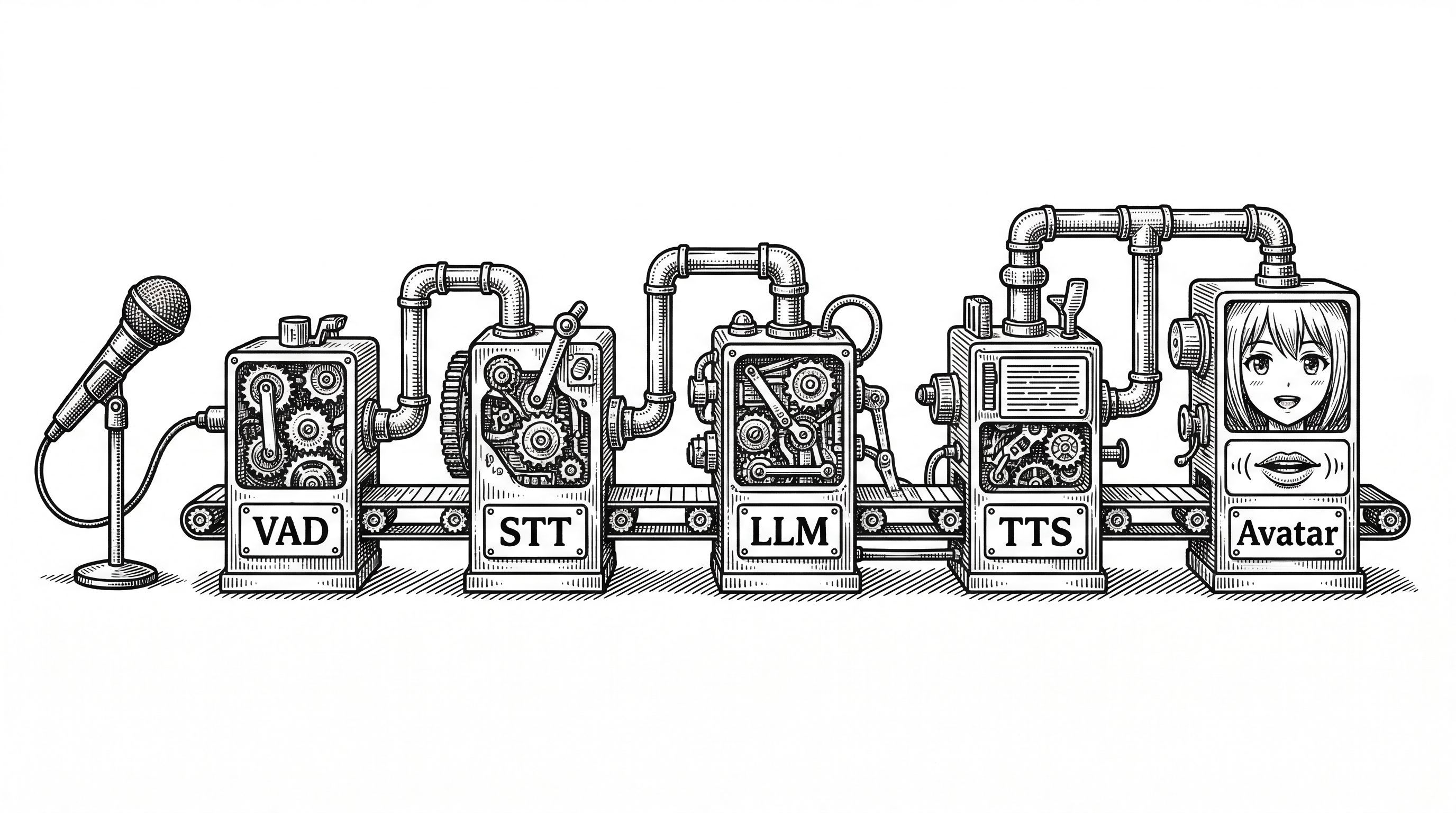
Realtime voice is the killer feature that separates AIRI from text-based chatbots. The pipeline starts with voice activity detection (VAD) running in a Web Worker. When speech is detected, audio streams to a speech-to-text engine. AIRI supports both local transcription via WebAssembly Whisper and cloud APIs through unspeech, a universal STT/TTS proxy the team built specifically for this project.
The transcribed text feeds into the LLM through xsAI. The response routes back through TTS synthesis, and a MediaPipe-based lip sync model drives the avatar's mouth movements in realtime. The entire loop targets sub-second latency in the browser.
On desktop, the Rust layer can bypass the browser entirely and use native CUDA or Metal for inference. This dual-track approach (web for accessibility, native for performance) is one of the more thoughtful architectural decisions in the project.
Playing Games, For Real
The game-playing capability is what generates the most excitement (and the most Neuro-sama comparisons). AIRI currently supports Minecraft and Factorio, with DomeKeeper in development through a separate repo.
The Minecraft agent uses Mineflayer, the established Node.js library for Minecraft bot control. The server runtime connects the LLM's decision-making to Mineflayer's action API. The AI companion can mine resources, build structures, explore, fight mobs, and chat with human players on the same server. It is not scripted behavior. The LLM reasons about what to do next based on game state.
Factorio works differently. The team built a RESTful API wrapper around the Factorio headless server's RCON console, plus autorio, a dedicated automation library. The AI companion can manage factory layouts, optimize production chains, and play cooperatively with humans.
Both agents share the same core character system, so the AI maintains consistent personality whether it is chatting in Discord, mining in Minecraft, or optimizing a Factorio assembly line.
"Have you dreamed about having a cyber living being or digital companion that could play with and talk to you? With the power of modern large language models, asking a virtual being to roleplay and chat with us is already easy enough. But what about the abilities to play games? And see what you are coding at?"
The 20+ Provider Problem
Supporting 20+ LLM providers sounds impressive. The reality is more nuanced. AIRI routes all LLM calls through xsAI, a lightweight SDK the team built as an alternative to Vercel's AI SDK. The pitch: same capabilities, much smaller bundle size.
The supported list is extensive. OpenAI, Anthropic Claude, Google Gemini, DeepSeek, Qwen, xAI Grok, Groq, Mistral, Cloudflare Workers AI, Together.ai, Fireworks.ai, Novita, and nearly a dozen Chinese providers including Zhipu, SiliconFlow, Stepfun, Baichuan, Minimax, Moonshot, and ModelScope. Local inference through Ollama, vLLM, and SGLang is also supported.
This breadth is partly practical (users in different regions need different providers) and partly aspirational (the project has a large Chinese-speaking community). The README is available in seven languages, and the project uses Crowdin for community translations.
Memory and Persistence
A digital companion that forgets every conversation is barely a companion at all. AIRI approaches memory with a dual-layer architecture.
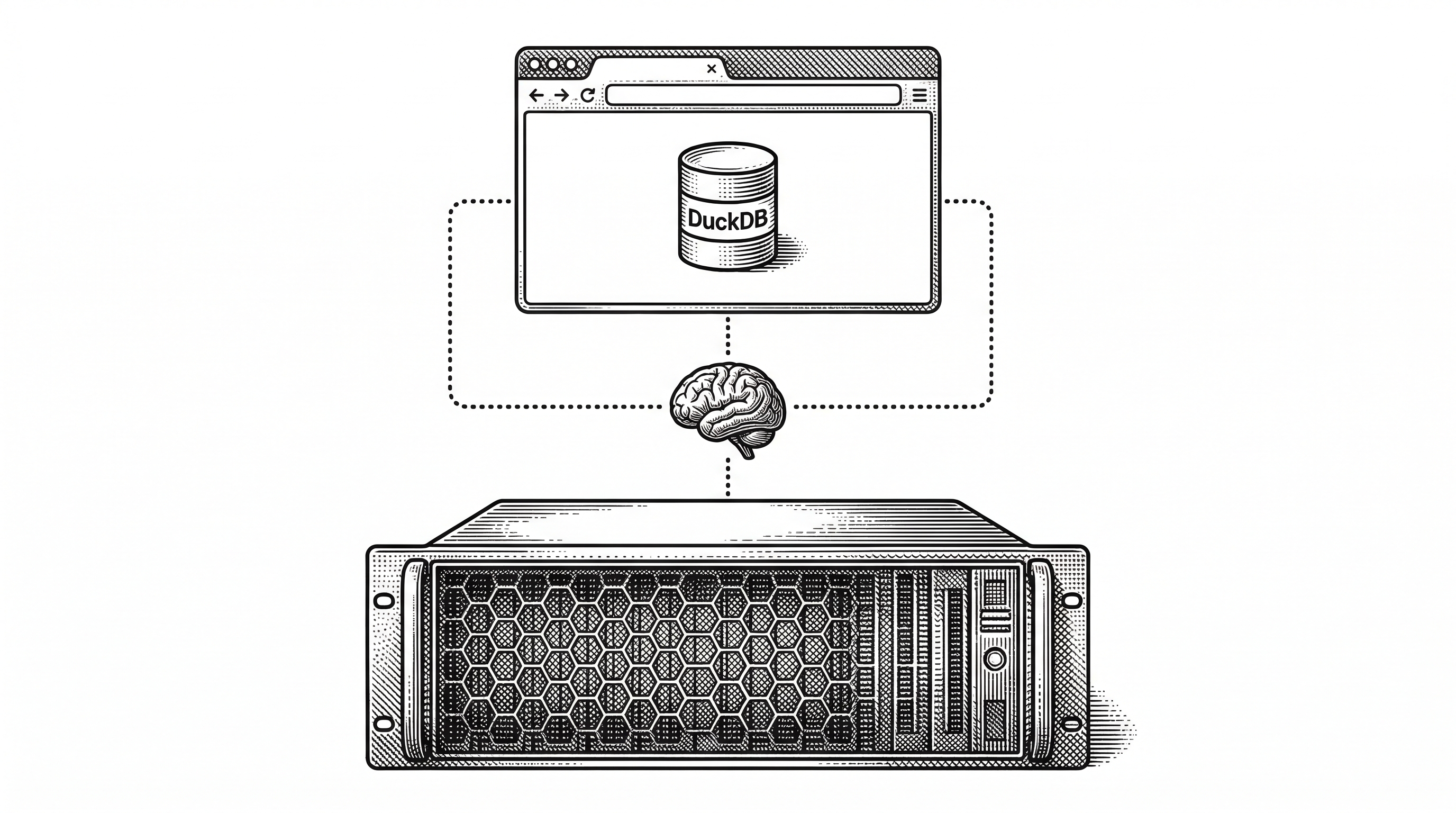
The browser layer uses DuckDB-WASM. The team built a Drizzle ORM driver for DuckDB-WASM, which is useful enough that other projects could adopt it. This handles short-term context and session state entirely in the browser, with no server needed.
The server layer uses pgvector for vector-based retrieval-augmented generation (RAG). Conversation history and factual knowledge get embedded and stored, enabling the companion to recall details across sessions. The memory system is still marked as work-in-progress ("Memory Alaya" in the codebase), suggesting significant development remains.
The Desktop and Mobile Story
AIRI is not just a web app. The Tamagotchi desktop app, built with Tauri, gives you a transparent-background avatar sitting on your screen. Think Clippy, but it is an anime character powered by an LLM that can see your code and talk to you. The Tauri MCP plugin enables Model Context Protocol integration, so the desktop app can connect to external tool servers.
On mobile, Stage Pocket uses Capacitor to deliver native iOS and Android apps. The mobile experience includes voice interaction, so you can talk to your AI companion on the go. PWA support means the web version also works on mobile browsers without installation.
Windows users can install via Scoop (scoop install airi/airi), and macOS gets a standard DMG. Linux builds are available from the GitHub releases page. The project clearly aims to be everywhere.
The Social Layer
A Satori protocol bot provides cross-platform messaging support, and the Bilibili plugin enables integration with China's largest anime streaming platform. Each service runs through the shared server runtime, which means the AI companion maintains consistent personality across all channels.
The VSCode extension takes a different angle: it lets the companion watch what you are coding and offer context-aware suggestions. Combined with the Claude Code plugin, AIRI starts to blur the line between AI companion and AI coding assistant.
The Ecosystem Effect
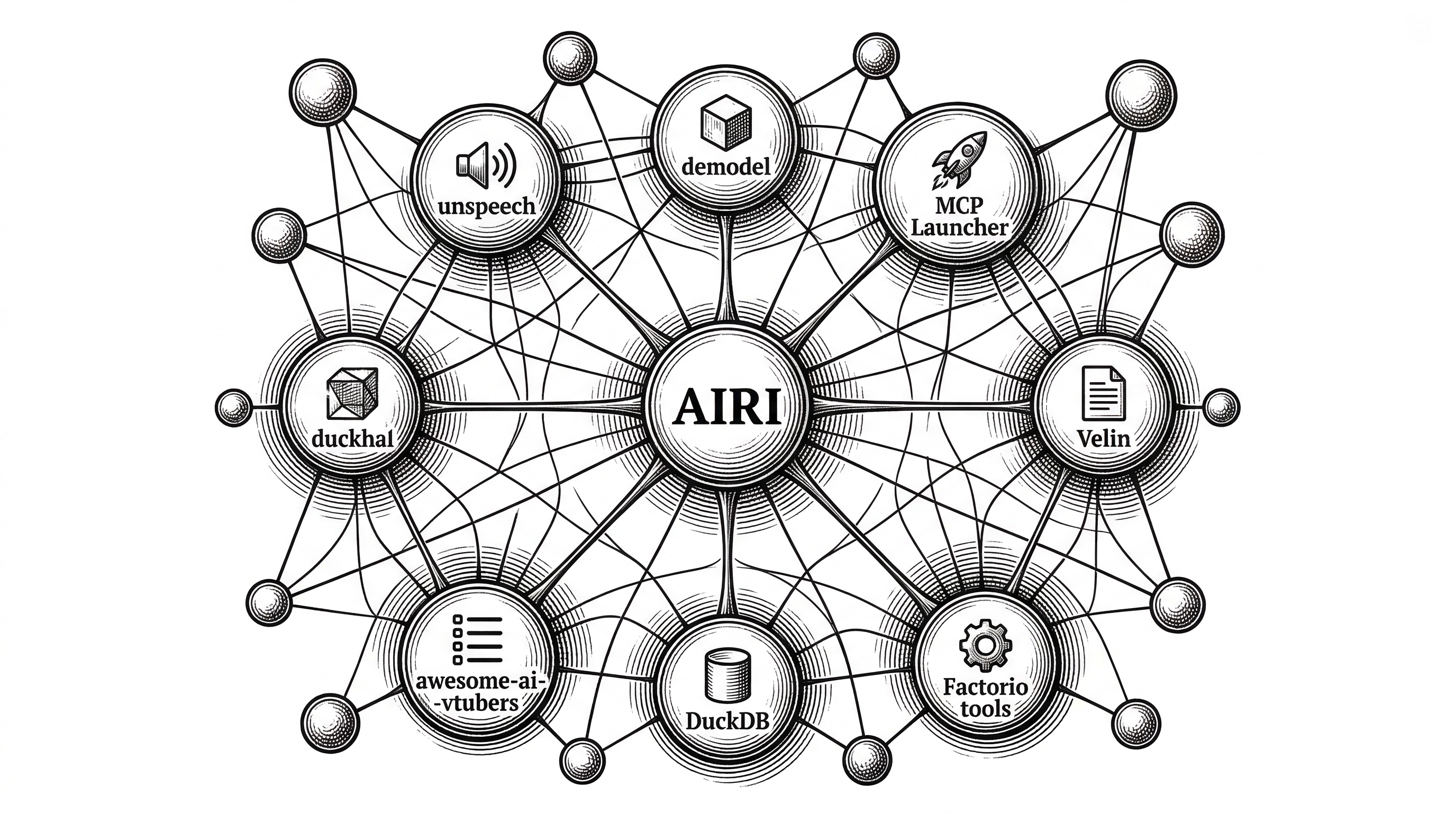
One of the most impressive aspects of AIRI is the ecosystem of sub-projects it has spawned. The team has pulled reusable components out of the monorepo and published them as standalone projects under the @proj-airi and @moeru-ai organizations.
unspeech is a universal endpoint proxy for speech-to-text and text-to-speech, like LiteLLM but for audio APIs. demodel simplifies pulling models from various inference runtimes. MCP Launcher is an easy-to-use MCP server builder, described as "like Ollama but for MCP servers." Velin lets you write stateful LLM prompts using Vue SFC syntax.
The Awesome AI VTubers list catalogs the entire space. These projects demonstrate that AIRI is not just building a product. It is building infrastructure that others can use.
What is Still Missing
The project is in alpha, and it shows. The memory system is explicitly work-in-progress. Several LLM providers (Azure OpenAI, AWS Claude, Spark, Volcano Engine) are listed as "PR welcome," meaning they are not yet implemented. The reinforcement learning and computer vision capabilities mentioned in the contributor call have not materialized.
Documentation exists but is scattered across the main README, a dedicated docs site, devlogs, and individual package READMEs. The setup process for the full development environment requires pnpm, Rust toolchain, and familiarity with monorepo workflows. This is not a "clone and run" project for most developers.
The contributor callout in the README is refreshingly honest about what is needed: Live2D modelers, VRM modelers, computer vision researchers, reinforcement learning experts, speech synthesis specialists, and more. This is a project that knows its ambition exceeds its current capacity.
"It's ok if you are not familiar with Vue.js, TypeScript, and devtools required for this project. You can join us as an artist, designer, or even help us to launch our first live stream. Even if you are a big fan of React, Svelte or even Solid, we welcome you."
The Community and Velocity
AIRI maintains an active presence across platforms. The Discord server, Telegram group, QQ group, and WeChat community all have dedicated channels. The project publishes regular devlogs (the most recent from March 14, 2026) that are unusually transparent about progress, challenges, and architectural decisions.
The release cadence is aggressive. Three alpha releases shipped in the first two weeks of March 2026 alone (alpha.13 through alpha.16). The repository sees daily commits, and the project was pushed as recently as March 18, 2026. This is not abandonware.
The top contributors include nekomeowww (Neko, the project lead), shinohara-rin, LemonNekoGH, and sumimakito. The project has also been featured on Product Hunt and TrendShift, and is available on itch.io for direct downloads.
The Bigger Picture
AIRI sits at the intersection of several trends that are accelerating simultaneously: LLMs becoming cheap and fast enough for realtime conversation, browser APIs becoming powerful enough for GPU compute, and the cultural normalization of AI companions through characters like Neuro-sama.
The project's bet is that the future of AI companions is not a chat window. It is a persistent, embodied presence that lives across your devices, plays games with you, manages your smart home, watches you code, and maintains memory of your shared history. Whether AIRI specifically achieves that vision matters less than the fact that an open source project with 34,000 stars is attempting it.
The closed-source AI companion space is crowded: Character.ai, Replika, and the original Neuro-sama all offer polished but locked-down experiences. AIRI's value proposition is ownership. Your data stays on your infrastructure. Your companion's personality is defined by your prompts. Your LLM provider is your choice. And when the stream goes offline, your companion does not disappear.