204 Skills That Turn Every AI Coding Agent Into a Domain Expert
One repo. Nine domains. Eleven AI coding tools. Alireza Rezvani's claude-skills library packages senior-engineer knowledge, C-suite advisory, marketing playbooks, and regulatory compliance into modular instruction sets any agent can absorb in seconds.
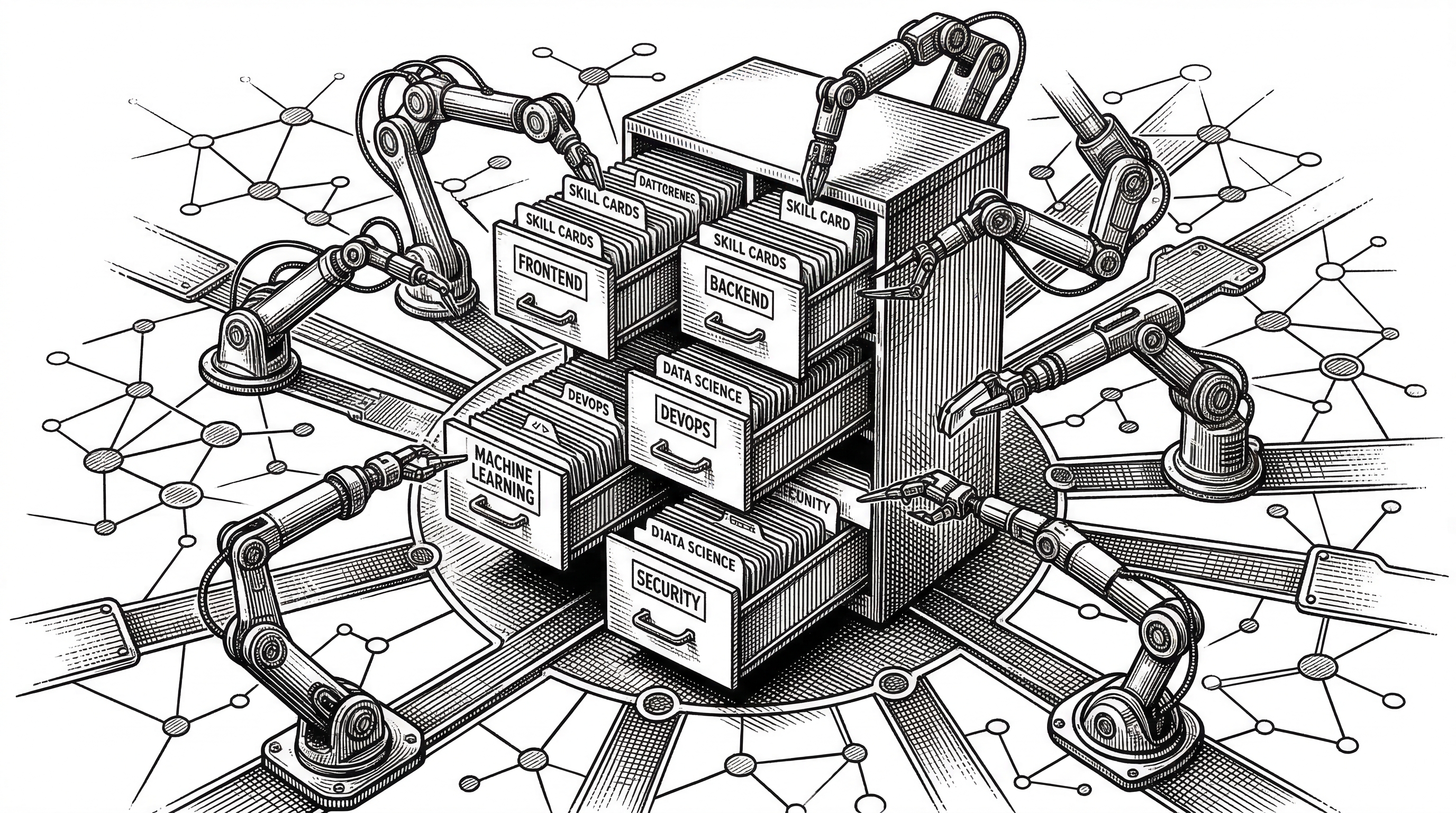
- claude-skills is the largest open-source skill library for AI coding agents, packaging 204 production-ready skills across engineering, marketing, product, compliance, C-level advisory, and finance into a single repo.
- A single conversion script transforms every skill into native formats for 11 tools including Claude Code, OpenAI Codex, Gemini CLI, Cursor, Aider, and Windsurf, so teams are never locked into one agent.
- All 266 Python CLI tools use only the standard library with zero pip dependencies, making them portable across any environment where Python runs.
- The real innovation is treating AI agent expertise as modular, versionable infrastructure rather than one-off prompt engineering buried in chat histories.
The Problem No One Had a Name For
By early 2026, AI coding agents had become genuinely useful. Claude Code led the pack with the strongest model and a mature plugin ecosystem. Codex, Gemini CLI, Cursor, and Aider each carved out loyal audiences. The tooling war was effectively over. Everyone had a capable agent.
But every agent started every conversation from zero. Ask Claude Code to design a microservices architecture and it would produce something reasonable but generic. Ask it to run an ISO 13485 compliance audit and it would hallucinate framework names. Ask it to think like a CFO evaluating a SaaS acquisition and you would get MBA-textbook filler.
The missing layer was domain expertise. Not model intelligence. Not tool integration. Packaged knowledge that an agent could absorb before doing work, the same way a new hire reads the company wiki before their first sprint.
What Is a Skill, Exactly?
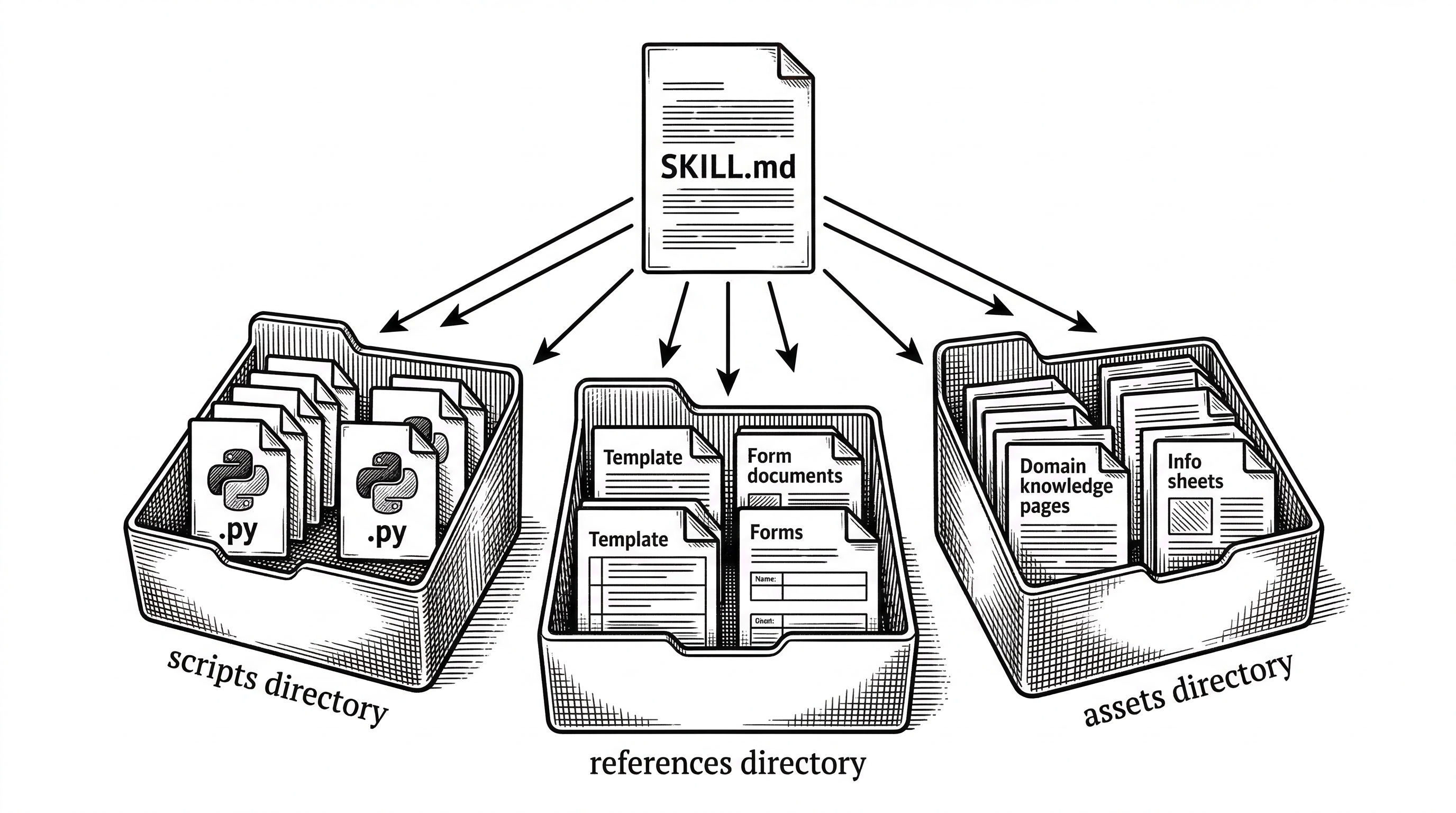
A skill is a folder. At its core sits a SKILL.md file: structured Markdown with YAML frontmatter that defines the skill's name, version, domain, and which tools it ships. The body contains instructions, workflows, decision frameworks, and domain-specific knowledge that an AI agent reads before starting a task.
Alongside the SKILL.md, most skills include a scripts/ directory with Python CLI tools and a references/ directory with templates, checklists, and domain artifacts. The Python tools are all stdlib-only. No pip install, no virtualenv, no dependency hell. They run anywhere Python runs.
senior-architect/
  SKILL.md          # Instructions + decision frameworks
  scripts/
    tech_debt_analyzer.py   # CLI: --json, --csv
    architecture_scorer.py
  references/
    adr-template.md
    review-checklist.md
The repo draws a useful distinction between three extension types. Skills define how to execute a task. Agents define what task to do. Personas define who is thinking. All three compose together through an orchestration protocol that lets you chain a Startup CTO persona with the senior-architect skill and the ci-cd-pipeline-builder agent for a single coordinated workflow.
Nine Domains, One Format
The breadth is what separates this repo from every other skills collection. Most skill libraries focus on engineering. This one covers the full org chart.
Engineering (55 skills) is the deepest domain, split into a core team and a POWERFUL tier. The core team includes role-based skills like senior-architect, senior-frontend, senior-devops, and senior-secops. The POWERFUL tier adds 30 advanced skills including an agent-designer for multi-agent orchestration, a RAG architect for retrieval pipeline optimization, a database-designer that generates ERDs and migration scripts, and an MCP server builder that scaffolds Model Context Protocol servers from OpenAPI specs.
The Playwright Pro sub-package alone includes 9 skills and 55 test templates covering everything from test generation to Cypress/Selenium migration to TestRail integration. The self-improving-agent skill is particularly clever: it implements auto-memory curation so the agent learns from past conversations and promotes useful patterns.
Marketing (43 skills) is organized into seven pods: Content, SEO, CRO, Channels, Growth, Intelligence, and Sales Enablement. It ships with 32 Python tools including a brand voice analyzer, keyword clusterer, and prompt A/B tester. A context-foundation skill and orchestration router coordinate the pods so they work as a system rather than isolated prompts.
C-Level Advisory (28 skills) covers the full C-suite: CEO, CTO, CFO, CMO, COO, CPO, CRO, CISO, CHRO, and Chief of Staff. Beyond individual executive perspectives, it includes board-meeting prep, board-deck-builder, scenario-war-room, strategic-alignment, and a culture-architect skill. These skills are designed for founders and leaders who need to think across domains, not just code.
Product (13 skills) spans the full product lifecycle from discovery through analytics. The landing-page-generator outputs TSX with Tailwind CSS. The SaaS scaffolder generates project structures. An experiment-designer helps set up A/B tests with proper statistical framing.
Regulatory and Quality Management (12 skills) targets heavily regulated industries with ISO 13485, MDR 2017/745, FDA, ISO 27001, GDPR, and CAPA frameworks. Six project management skills covering Jira, Confluence, and Scrum Master workflows round out the operational domain.
Finance and Business Growth (6 skills) includes a financial analyst with DCF and budgeting capabilities, a SaaS metrics coach that tracks ARR/MRR/churn/LTV/CAC, plus customer success, sales engineering, and revenue ops skills.
Write Once, Run on Eleven Agents
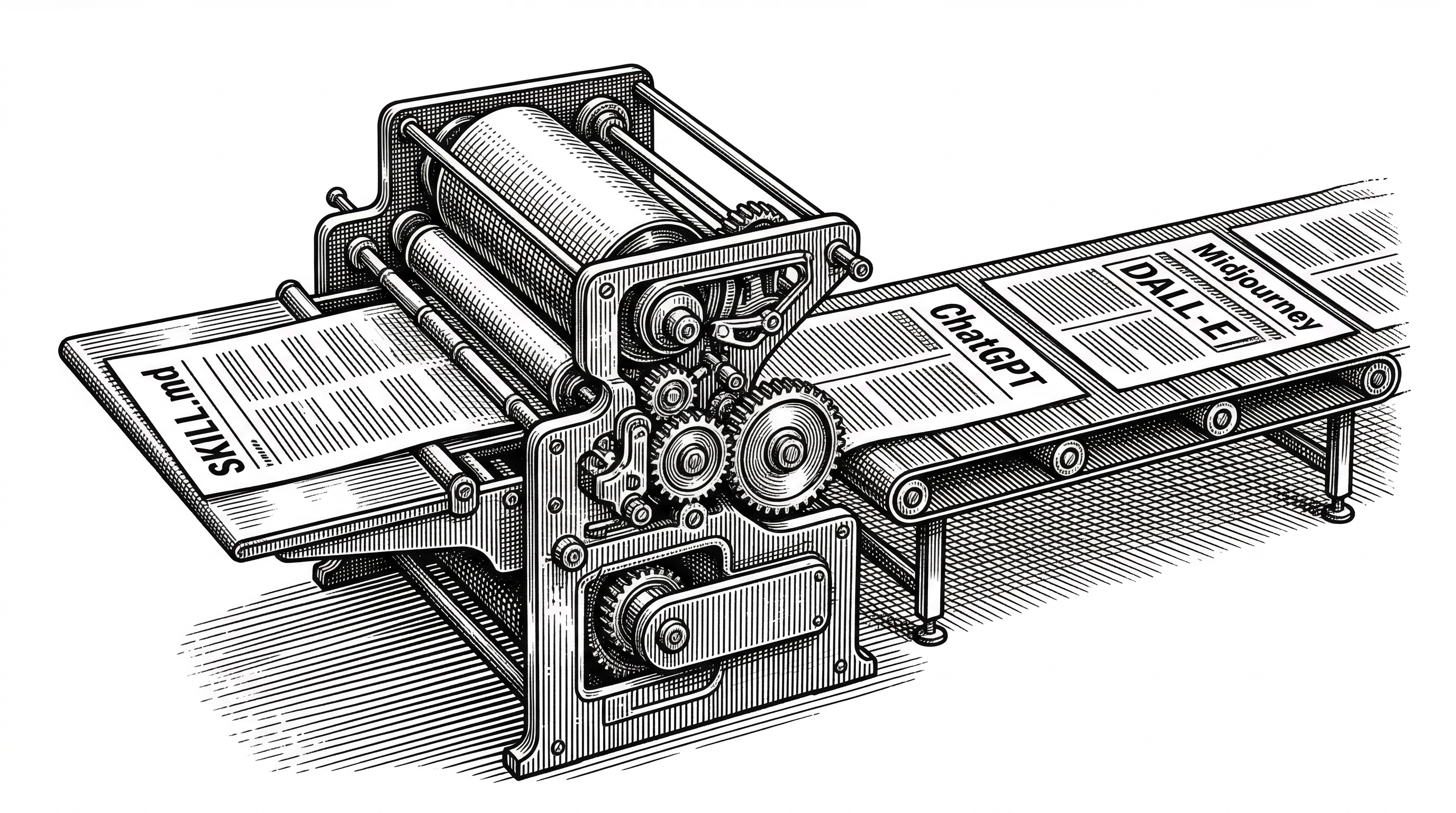
The most technically impressive feature is the conversion pipeline. Every skill is authored once in the SKILL.md format. A single shell script transforms all 204 skills into native formats for 11 different AI coding tools.
# Convert all skills to all tools (~15 seconds)
./scripts/convert.sh --tool all

# Install into your project
./scripts/install.sh --tool cursor --target /path/to/project
Claude Code gets skills in ~/.claude/skills/. Cursor gets .mdc rule files. Aider gets CONVENTIONS.md. Windsurf, Kilo Code, OpenCode, Augment, and Antigravity each get their own native format. The conversion handles structural differences between platforms, not just file renaming.
For Claude Code users, installation is even simpler. The repo registers as a plugin marketplace, so you can install entire domain bundles with a single command.
# Add the marketplace
/plugin marketplace add alirezarezvani/claude-skills

# Install by domain
/plugin install engineering-skills@claude-code-skills
/plugin install marketing-skills@claude-code-skills
/plugin install c-level-skills@claude-code-skills
This cross-platform portability matters. Teams rarely standardize on one agent. A frontend developer might use Cursor while the backend team prefers Claude Code and the DevOps engineer works in Gemini CLI. Shared skills mean shared standards regardless of tool choice.
266 Python Tools, Zero Dependencies
The Python tooling deserves its own section. Every script uses only the Python standard library. No pip installs. No requirements.txt. No dependency conflicts. Every tool supports --help, and most support --json and --csv output flags.
# SaaS health check
python3 finance/saas-metrics-coach/scripts/metrics_calculator.py \
  --mrr 80000 --customers 200 --churned 3 --json

# Brand voice analysis
python3 marketing-skill/content-production/scripts/brand_voice_analyzer.py article.txt

# Tech debt scoring
python3 c-level-advisor/cto-advisor/scripts/tech_debt_analyzer.py /path/to/codebase

# Security audit a skill before installing it
python3 engineering/skill-security-auditor/scripts/skill_security_auditor.py /path/to/skill/
The skill-security-auditor is especially notable. It scans any skill for command injection, code execution, data exfiltration, prompt injection, and supply chain risks before you install it. The output is a clear PASS/WARN/FAIL verdict with remediation guidance. In a world where agent skills can execute arbitrary code, this is table stakes for trust.
The zero-dependency constraint is a deliberate design choice. Skills need to run in sandboxed environments, CI/CD pipelines, and air-gapped systems. Requiring pip would break half those use cases.
Personas and Orchestration
Three built-in personas go beyond skill selection to define how an agent thinks, prioritizes, and communicates. The Startup CTO persona loads architecture and strategy skills with a technical founder's voice. The Growth Marketer combines content and channel skills with a bootstrapped marketing lens. The Solo Founder persona loads skills from every domain because that is what solo founders actually need: the ability to context-switch between engineering, marketing, finance, and product in a single session.
The orchestration protocol defines four patterns for combining these building blocks. Solo Sprint switches personas across project phases. Domain Deep-Dive stacks multiple skills under one persona. Multi-Agent Handoff has personas review each other's output for high-stakes decisions. Skill Chain runs sequential skills without any persona for repeatable processes.
"Skills transform AI coding assistants from generic assistants into your organization's almost perfect digital employees."
The Competitive Landscape
Claude Code's plugin ecosystem has over 9,000 plugins as of early 2026. Anthropic maintains an official plugin directory. Community marketplaces like SkillsMP aggregate skills with search and filtering. Larger collections like claude-code-plugins-plus-skills claim 340 plugins and 1,367 skills.
So what makes this repo different? Three things.
First, domain breadth. Most skill repos focus on engineering workflows. This one covers nine domains including marketing, finance, regulatory compliance, and C-level advisory. That breadth reflects a bet that AI agents will move beyond coding into every knowledge-worker function.
Second, cross-platform portability. Most skills are written for a single tool. This repo's conversion pipeline means the same expertise works across 11 agents. If you switch from Cursor to Claude Code, your skills come with you.
Third, the tooling layer. Skills that include only a Markdown file with instructions are common. Skills that ship with 266 tested CLI tools that actually compute things (DCF analysis, brand voice scoring, tech debt calculation) are rare.
| Aspect | claude-skills | Typical Skill Repos | Official Plugin Directory |
|---|---|---|---|
| Skills count | 204 | 10-50 | Curated selection |
| Domains covered | 9 (eng to finance) | 1-2 (usually eng only) | Varies |
| Tool support | 11 agents via convert.sh | 1 agent (usually Claude Code) | Claude Code only |
| Python CLI tools | 266 (stdlib-only) | Few or none | Varies by plugin |
| Personas | 3 built-in + template | Rare | Not a concept |
| Security auditing | Built-in auditor | None | Manual review |
| License | MIT | Varies | Varies |
Who Built This and Why
Alireza Rezvani is a CTO and AI builder based in Berlin. He writes extensively on Medium about Claude Code, agentic workflows, and building products with AI. The repo started in October 2025 and has grown steadily since, hitting 5,500+ stars and 655 forks.
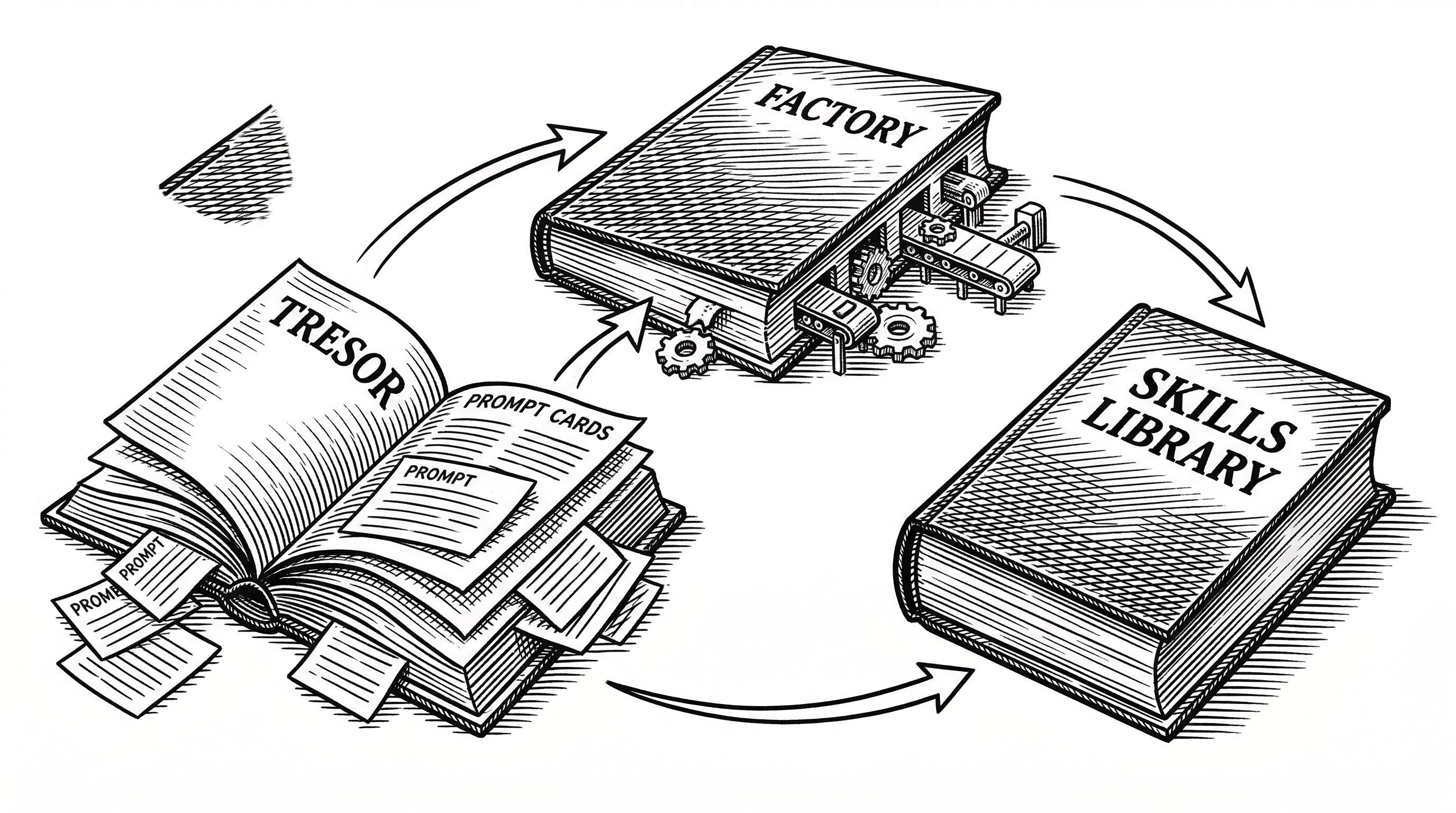
Rezvani also maintains the Claude Code Skills and Agents Factory, a toolkit for building new skills at scale, and Claude Code Tresor, a productivity toolkit with 60+ prompt templates. The three repos form a coherent ecosystem: Tresor for quick prompts, the Factory for skill authoring, and claude-skills as the curated library.
The project follows semantic versioning and publishes a CHANGELOG. A SKILL-AUTHORING-STANDARD document defines the format for community contributions. The CONTRIBUTING guide welcomes new skills, improved Python tools, and translations for non-English markets.
Limitations and Open Questions
The repo is ambitious, and that ambition creates surface area for legitimate questions.
Quality at scale. 204 skills is a lot to maintain. The quality of a marketing copywriting skill and an ISO 13485 compliance skill are very different things to validate. The SkillCheck badge on the README suggests automated validation, but the depth of domain review for each skill is unclear.
Adoption signals beyond stars. 5,500 stars and 655 forks are strong numbers. But stars measure interest, not production usage. It would be useful to see case studies or usage telemetry from teams running these skills in real workflows.
Context window costs. Skills work by injecting instructions into the agent's context. A skill that loads a 2,000-word SKILL.md plus multiple reference documents consumes tokens that could otherwise go to the user's actual task. The trade-off is usually worthwhile, but it is a trade-off.
Conversion fidelity. The 11-tool conversion script is impressive, but each agent has different capabilities and constraints. A skill that works perfectly in Claude Code might lose nuance when converted to Cursor's .mdc format. The conversion handles structural mapping, but semantic fidelity across platforms is hard to guarantee.
What This Means for the Agent Ecosystem
The broader significance of claude-skills is the pattern it establishes. Treating agent expertise as modular, versionable, portable infrastructure is a fundamental shift from the way most teams use AI coding agents today.
Most organizations still treat AI agent configuration as ad hoc. Someone writes a good system prompt, shares it in Slack, and it gets copy-pasted until it drifts. Skills formalize that process. They create a shared library of institutional knowledge that agents can load on demand, complete with version history and quality checks.
The cross-platform portability is the key multiplier. As the AI coding tool market fragments across Claude Code, Codex, Gemini CLI, Cursor, and others, skills that work everywhere become more valuable than skills locked to one platform. Rezvani is betting that the skill layer will outlast any individual agent. That is a bet worth watching.
"Agent Skills replaced static plugins as the primary extension point, and skills auto-activate based on conversation context. No slash commands needed."