seomachine: The Prompt OS That Replaced a Content Agency
One solo founder open-sourced the Claude Code workspace he built for his 7-figure SaaS company. It is not another prompt. It is an entire operating system of agents, skills, context, and data-driven analysis that turns natural language commands into researched, written, optimized, and published articles.

- seomachine treats a Claude Code workspace as a complete operating system with commands as entrypoints, specialized agents as processes, reusable skills as libraries, and Python modules as the deterministic kernel.
- Rich context files containing brand voice, writing examples, and competitor research provide the critical foundation that enables consistent on-brand output.
- Python analysis modules deliver objective 0-100 scores for SEO, readability, and CRO that guide iterative improvement and remove common AI detection patterns.
- A non-technical SaaS founder built and open-sourced this end-to-end system that researches, writes, optimizes, and publishes SEO content directly to WordPress.
A New Kind of Software
Most AI writing tools hand you a single prompt and hope for the best. seomachine does something different. It treats the Claude Code workspace as a complete operating system for marketing intelligence.
At the top level sit commands — natural language entrypoints like /write or /research. These orchestrate agents, narrow expert personas with specific jobs. Agents draw on skills, reusable libraries of marketing expertise. Everything is grounded in rich context files and scored by deterministic Python modules that act as the kernel.
This is prompt engineering elevated to software architecture. The result is consistent, high-quality, on-brand content that fights the AI detection arms race instead of surrendering to it.
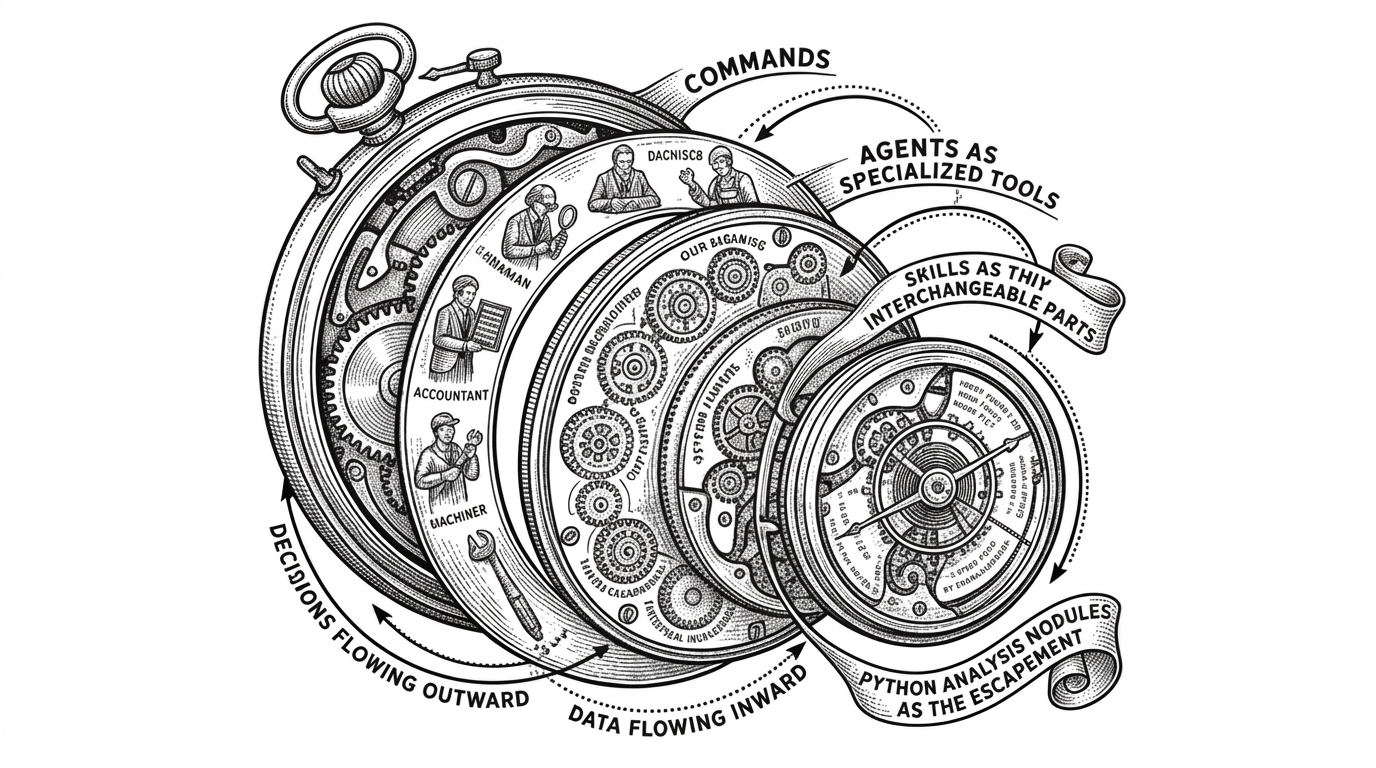
The Architecture in Action
Run /write podcast hosting platforms and the system springs to life. The research command pulls SERP data, competitor analysis, and search intent via DataForSEO. A brief is assembled. Then the writing agent, informed by your custom brand-voice.md and writing-examples.md, produces a 2,500-word draft.
Multiple analysis agents then activate in sequence: the SEO optimizer checks keyword density and structure, the content analyzer scores readability, the CRO analyst looks for conversion opportunities. Python modules provide objective 0-100 scores that feed back into the next generation step.
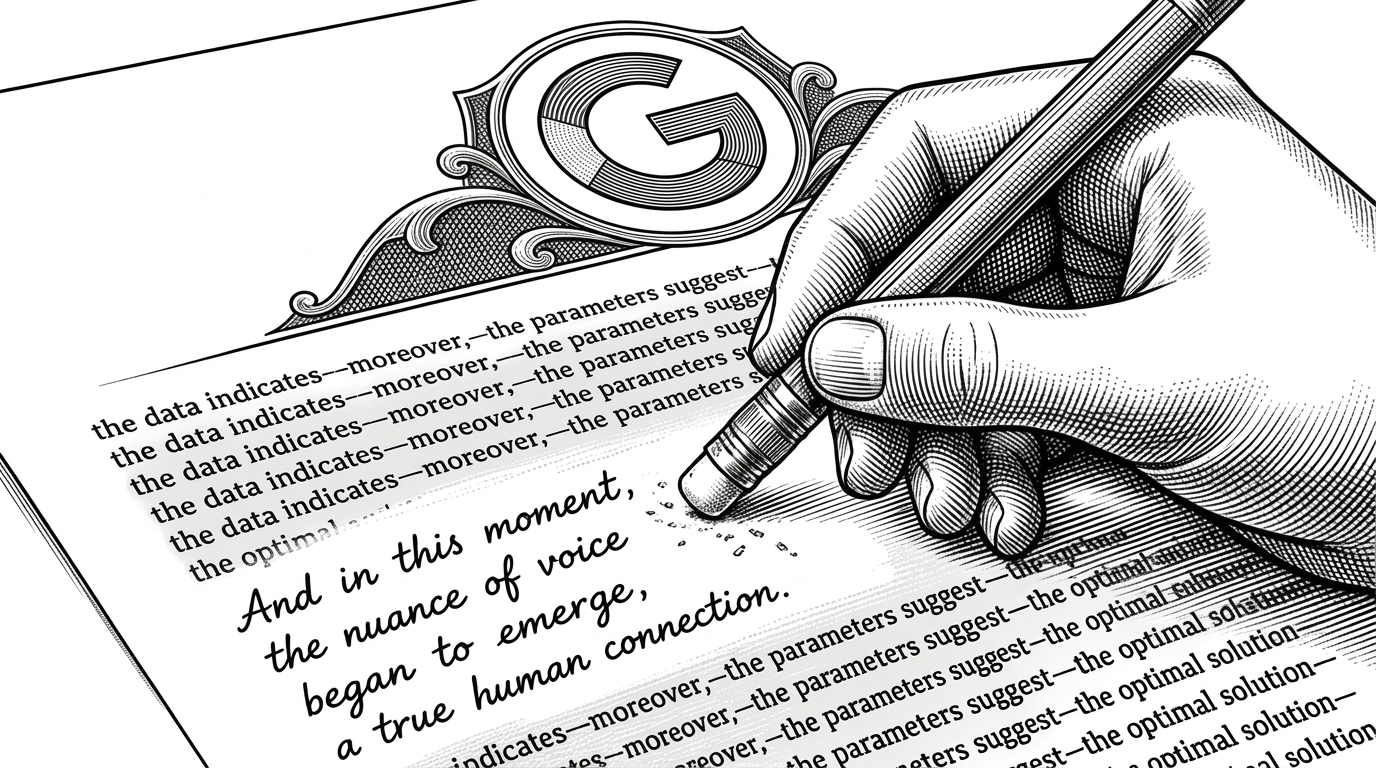
Finally the /scrub command and content_scrubber.py remove common AI tells before the content is published directly to WordPress with full Yoast metadata.
The whole key of why this is such a powerful tool is it has an enormous amount of context about you, your brand, how you write. This is by far the most important part. Don't skimp on this.
The Human in the Loop
Craig Hewitt is not a developer. He is the founder of Castos, a 7-figure podcast hosting platform. During his "100 Days of AI" experiment he needed to scale high-quality SEO content without hiring an expensive agency. So he built this system for himself.
He was nervous about open sourcing something so core to his business. "Honestly, pretty scared to open source something I made," he wrote on LinkedIn. "But it feels like the right thing to do."

The origin story reveals why context files are non-negotiable. Without detailed brand-voice.md, multiple writing examples, and competitor research, the system cannot produce work that feels like it came from your team. Craig repeatedly calls this the most important part of the setup.
Beyond Generic Prompts
What separates seomachine from collections of clever prompts is its deliberate structure and hybrid nature. The 11 specialized agents have narrow mandates. The 26 skills come with reference materials, templates, and playbooks. Python modules deliver objective signals that LLMs alone cannot provide.
The system integrates real performance data from Google Analytics 4 and Search Console. It publishes directly to WordPress. And it consciously addresses the current reality that Google and other platforms are getting better at detecting AI-generated content.
| Project | Stars | Claude Integration | End-to-End Workflow | Real Analytics | Publishing | Specialization |
|---|---|---|---|---|---|---|
| seomachine | 2.7k | Full workspace + agents + commands | Yes (research to publish) | GA4 + GSC + DataForSEO | WordPress + Yoast | SEO content factory |
| AgriciDaniel/claude-seo | ~2.3k | Skills + audits | Partial | Multiple tools | No | Technical SEO audits |
| alirezarezvani/claude-skills | ~5.1k | Broad skill library | No | Limited | No | General marketing toolkit |
| Commercial tools (Jasper, Surfer) | N/A | Proprietary | Yes | Varies | Some | General AI writing |
Who This Is For (and Who It Is Not)
seomachine shines for solo founders, small marketing teams, and SaaS companies that want full control over their content pipeline and are willing to invest time in rich context files. It rewards thoughtful setup with remarkably consistent output.
It is not a zero-effort magic button. The Python dependencies must be installed. Context files must be written with care. And human oversight remains essential for final judgment and strategic direction.
Yet for those willing to treat prompt composition as serious architecture, it demonstrates something profound: the most powerful new applications in 2026 may not be written in traditional code but composed as structured prompt systems.
You don't have to hire that expensive and maybe crappy SEO agency. You can do it yourself, have full control over the code and the mechanics and how the tool works and the outcome that you get from it.
The New Paradigm
seomachine is more than a content tool. It is a case study in hybrid symbolic + generative systems. The Python kernel provides truth signals. The LLM agents provide creativity and synthesis. The structured workspace provides reliability.
In an era where many are throwing generic prompts at problems, Craig Hewitt showed what happens when you apply traditional software thinking to the new medium of prompts. The result is something that feels less like an AI toy and more like a production system.
And he gave it away for free.